
Technical guide
The price per metre of uPVC windows in Egypt: what the number is actually made of
Why there is no single price per metre for uPVC windows, and which items actually move the number: system, profile depth, reinforcement, glass, hardware and installation.
August 2026
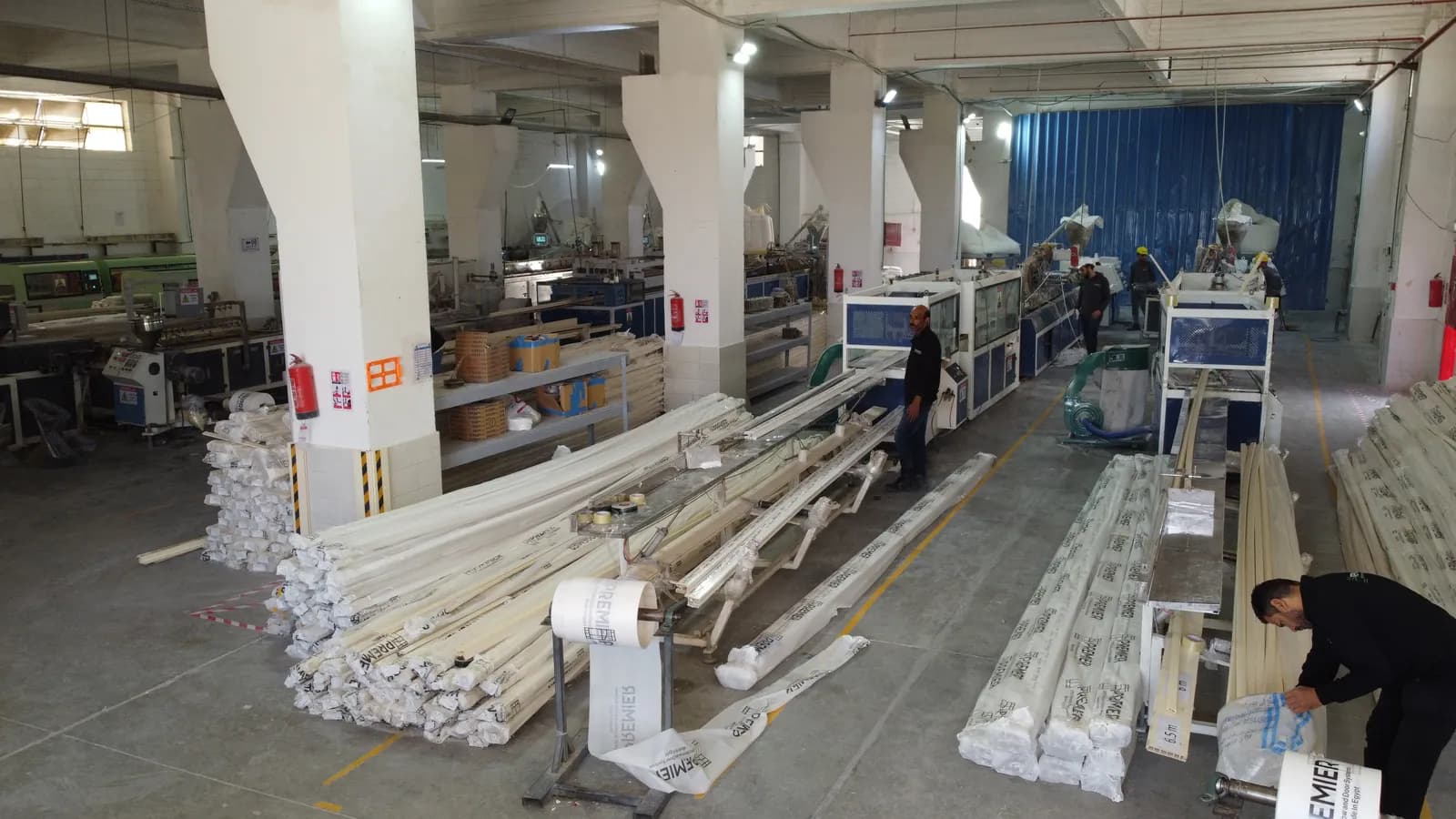
The question we get most often is "how much per metre?". The honest answer is that a metre of window is not one commodity — it is an assembly of profile, steel reinforcement, glass, hardware, fabrication labour and installation. Change one of those items and the whole number moves, which is why the price is quoted against real sizes and quantities rather than as a published flat rate.
What actually moves the price
- System and profile depth: a 58 mm three-chamber casement is not a 70 mm six-chamber casement — the difference is in both material content and thermal performance.
- Steel reinforcement: every structural profile carries an internal steel bar whose section and thickness are set by the opening size and the wind load.
- Glass: double glazing at different build-ups — the systems accept from 18 mm up to 42 mm — and the thickness and type (reflective, laminated, low-E) is a cost line of its own.
- Hardware: handles, hinges and espagnolettes, and the opening type (side-hung, tilt-and-turn, sliding).
- The opening geometry: number of sashes, mullions, arches and fly screens — each addition means more profile and more hardware.
- Installation and site: the building, the floor, the fixing method and the surrounding finish.
Why the price differs between systems
The difference is not commercial packaging; it is in the section itself. The table below is from Premier's technical catalogue — the same figures published on the system pages:
| System | Construction depth | Chambers | Uw |
|---|---|---|---|
| SETI Casement 60 | 58 mm | 3 | 1.30 |
| SETI Sliding 100 | 100 mm | 3 | 1.61 |
| Frankfort Casement 70 | 70 mm | 6 | 1.18 |
| Frankfort Sliding 120 | 117 mm | 3 | 1.45 |
| Frankfort Sliding 140 | 137 mm | 3 | 1.54 |
The number in a system name is a commercial series name, not the measured depth: "60" measures 58 mm, "120" measures 117 mm and "140" measures 137 mm. Confirm the figure with Premier before specifying to a tolerance.
How to compare two quotations fairly
The cheapest price per metre on the market can be the most expensive one two years later. Ask every quotation to state, in writing: the system name and its depth, the profile wall thickness, the reinforcement section and whether it is there at all, the full glass build-up, the hardware brand, and what the warranty actually covers. Two quotations at the same "price per metre" can differ fundamentally on those lines.
The figures above come from Premier's technical catalogue. Final pricing and availability are confirmed by the Premier team against your actual sizes and quantities.
COMMON QUESTIONS
- Do you publish a price list per metre?
- No. The price depends on the system, the sizes, the glass, the hardware and the number of openings, so a written quotation is issued for your project instead of a general figure that would be out of date immediately.
- What do you need in order to quote?
- The opening sizes, the opening type you want for each, the floor and location, and any glass or acoustic requirement. Approximate sizes are enough for an initial quotation, which is then reviewed after a site survey.